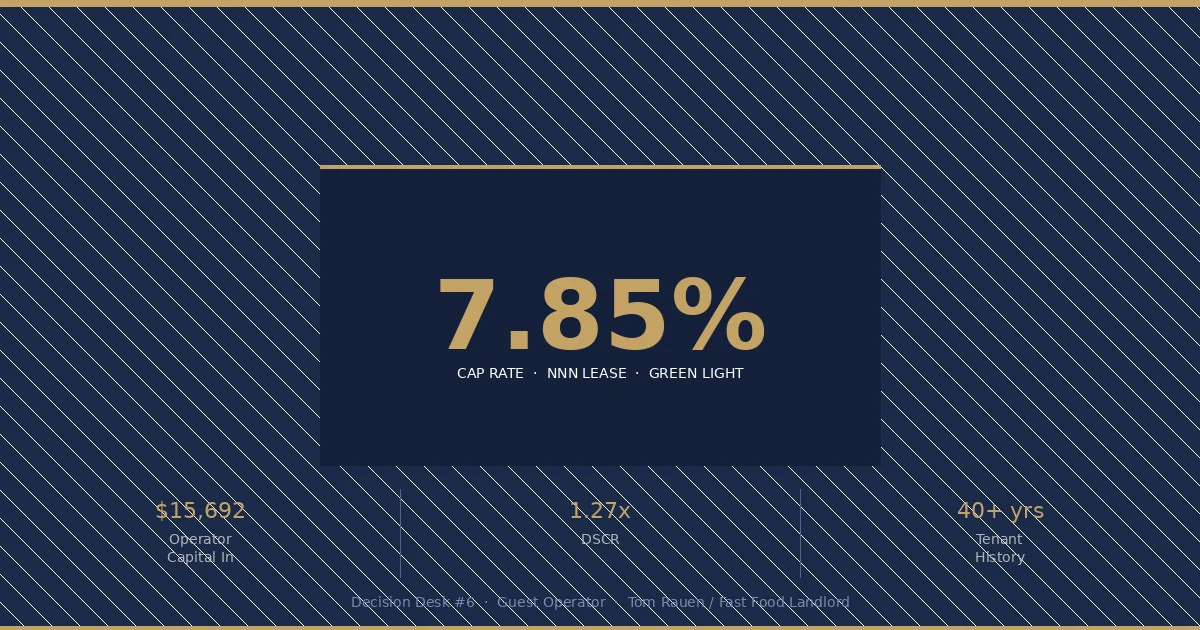
The known variables in this deal were unusually strong. The tenant had been at this location for over 40 years — not just lease years remaining, but actual operating history at a single address. A Village Inn serving the same community for four decades is an institution, not a lease. The previous owner held the property for that same period. That alignment between owner and tenant is a legacy asset signal.
The rent-to-revenue ratio was healthy. At approximately 5% of the location's $1.8–1.9M in annual revenue, the rent sits well within the range where Village Inn operates profitably. The average Village Inn franchise generates $1.6M per year. This location runs above that. A ratio climbing toward 10% compresses tenant margins and creates renewal risk. At 5%, renewal risk is low.
The location had structural demand advantages. Positioned adjacent to a college with no competing sit-down restaurants within several miles, the customer base is layered: student and staff traffic on weekday mornings, family traffic on weekends, and a loyal habitual base drawn by Village Inn's breakfast-and-lunch identity. Placer.ai trade area data confirmed most patrons travel from within 3 miles — a sticky, non-transferable demand profile.
The cap rate was above market. NNN properties in this category typically trade at 5.5–7%. A 7.85% cap rate on an above-average-revenue tenant with 40+ years of location history is real value acquisition, not a distressed-asset bet.
And the NNN structure eliminated operational exposure entirely. No insurance bills. No property tax invoices. No maintenance calls. No CAM reconciliations. Tom frames this as ROT, ROH, and ROE — Return on Time, Return on Headaches, Return on Effort. You typically pay a premium for that level of passivity. Here, it came at a cap rate most NNN buyers don't see.
The full teardown covers what was assumed, what was uncertain, what could go wrong (and the risks this deal structurally doesn't have), why the $0 CoC is a feature not a bug, and the Decision Verdict — including what the deal teaches about the difference between cash flow and wealth creation.